

VeliPlay Plinko arena
GodPlay Plinko Demo
Practice the mythic Plinko board, read the 96% RTP note, compare Zeus and Hades bonuses, and learn which settings change the payout spread before real-money play.
facts, screenshots and links checked
Game facts
What GodPlay Plinko is
GodPlay Plinko is a VeliPlay instant casino game built around a peg board, risk levels and Greek-god bonus energy. The useful promise is not a magic system. It is clarity: what the screen shows, what the rules state and where the uncertainty sits.
The official game page names VeliPlay as the provider and presents the game as a Plinko experience with Zeus and Hades. The player chooses a bet, a risk level and a row count, then drops a ball through pegs. The final slot pays the multiplier shown on that slot. Center slots tend to carry lower payouts, while edge slots carry higher values and wider swings.
The public materials state a 7,500x maximum win and show Low, Medium and High risk settings. The RTP needs careful wording because the official page contains a conflict: the meta and feature grid state 96%, while one animated metric displays 97%. This guide uses 96% because it is the safer published value and labels the conflict rather than smoothing it over.
GodPlay Plinko also adds two named bonus routes. Zeus has a progress bar and a 50x buy option. Hades costs 100x and pushes boosted values higher. Both bonuses use 15 automatic balls, and neither bonus balls nor purchased bonuses build Zeus progress. That detail matters because bonus buying changes exposure, not the underlying random landing logic.

| Parameter | Value | Source |
|---|---|---|
| Provider | VeliPlay | Official game page and brand files |
| Game type | Plinko instant game | Official page and playable demo |
| Primary keyword | GodPlay Plinko demo | SERP plan saved in research notes |
| RTP used here | 96% | Official meta and feature grid; one page metric conflicts |
| House edge | 4% | Calculated from 96% RTP |
| Max win | 7,500x | Official page feature data |
| Risk levels | Low, Medium, High | Official UI and screenshots |
| Rows | Up to 13 | Official page; screenshots show 9-12 controls |
| Bonus buys | Zeus 50x, Hades 100x | Official page and screenshots |
| Bonus balls | 15 | Zeus and Hades bonus rules |
Mechanics
The ball path is the whole story
The board should be read from top to bottom: bet, risk, rows, peg path, final multiplier. That is also the design pattern of this site.
Set the stake
Pick a bet amount before the drop. Zeus progress is saved separately for each bet amount, so changing stake changes the progress context.
Choose risk and rows
Low, Medium and High change payout spread. Row count changes how many peg interactions the ball has before it lands.
Drop the ball
After Play, the landing is random. Turbo only speeds the reveal, and Auto bet only repeats the action.
Read the slot
The slot where the ball lands decides the multiplier. Edge slots can pay more, but they also reflect higher volatility.
Risk lab
Risk levels and rows change the payout shape
Use this as a reading map for the game screen. It does not predict the next drop.
Medium risk reading
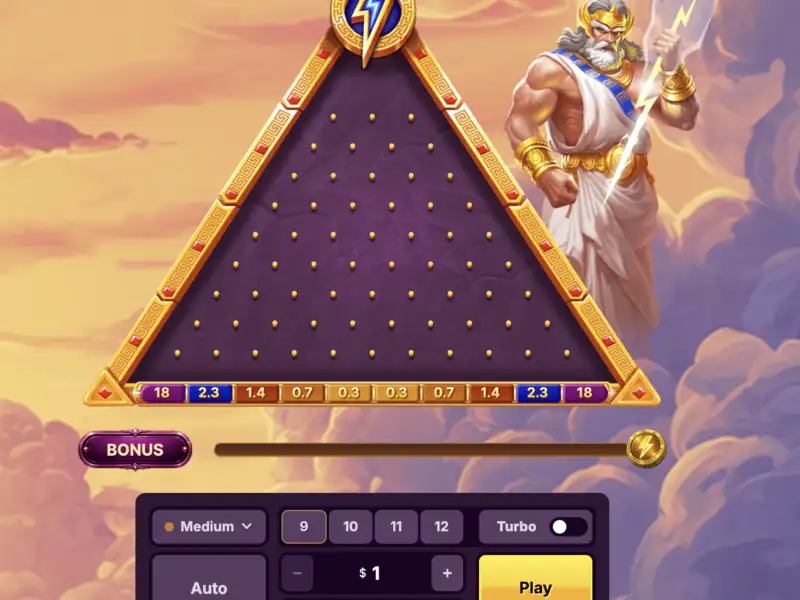
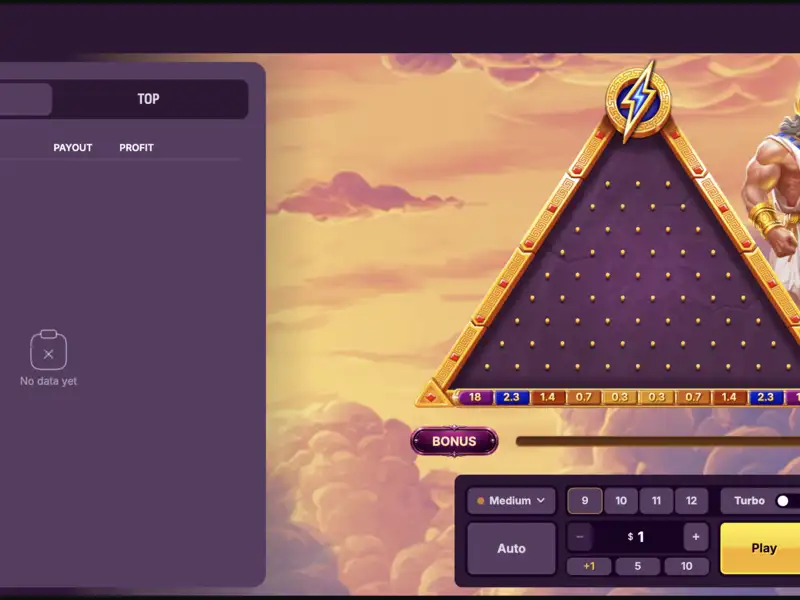
Medium risk is the clean practice setting because it shows both low center values and meaningful edge multipliers. A 9-row screenshot shows 18x on both edges, 2.3x and 1.4x near the edges, 0.7x shoulders and 0.3x center slots.
18x2.3x1.4x0.7x0.3x0.3x0.7x1.4x2.3x18x
Numbers lab
Stats and diagrams from the GodPlay Plinko board
The numbers below turn the source notes into quick visual checks: RTP split, bonus-buy exposure, risk spread and row depth.
RTP split
Using the safer official value, 96% RTP implies a 4% house edge before casino-specific terms.
96% RTP4% edge
Bonus buy cost
Hades costs double Zeus. At the same base bet, the paid entry is the biggest budget decision on the screen.
Risk spread
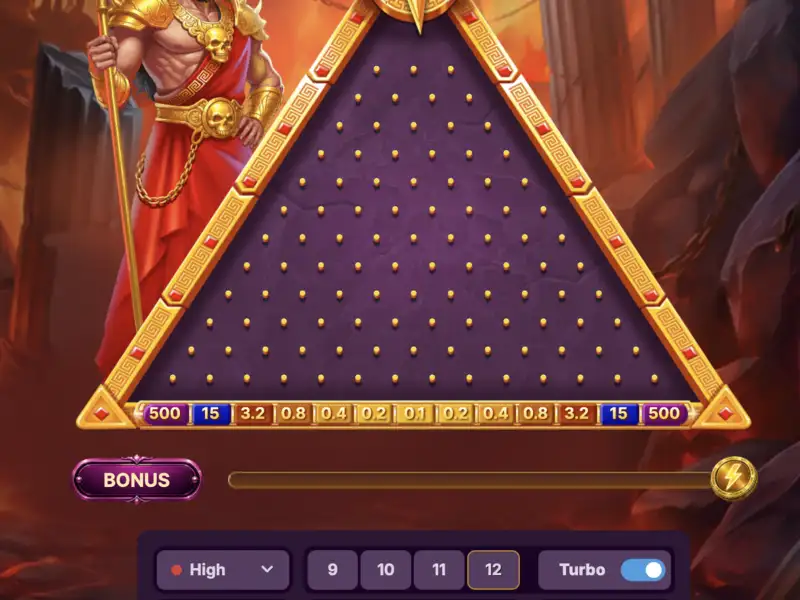
Low keeps more value near the middle. High pushes the story toward rare edge hits and deeper center lows.
Low
Medium
High
Row depth
More rows means more peg interactions before a result. The game materials show row choices up to 13.
910111213
Bonus duel
Zeus and Hades are different exposure choices
The named bonuses are the clearest unique feature in GodPlay Plinko. Treat them as paid mechanics with different boost ranges, not as shortcuts around variance.
Zeus bonus
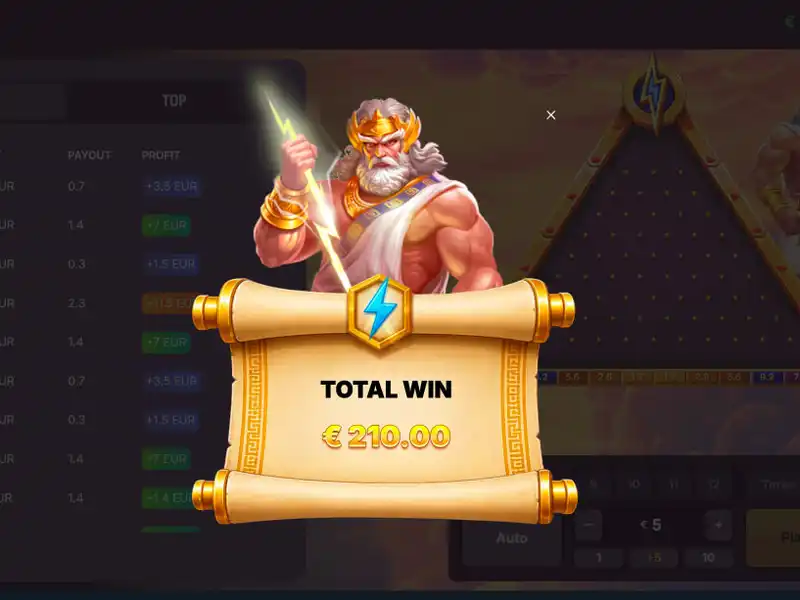
Cost: 50x bet. Bonus balls: 15. Boost range: 2x to 5x on a random multiplier slot.
Zeus also has a progress bar that fills from regular paid bets. Progress is tied to the bet amount and does not grow during purchased or bonus rounds.
Hades bonus
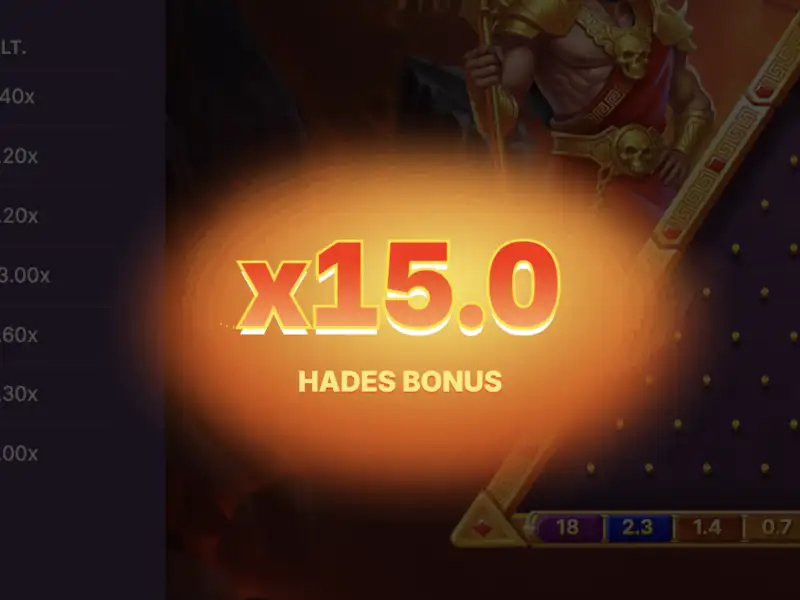
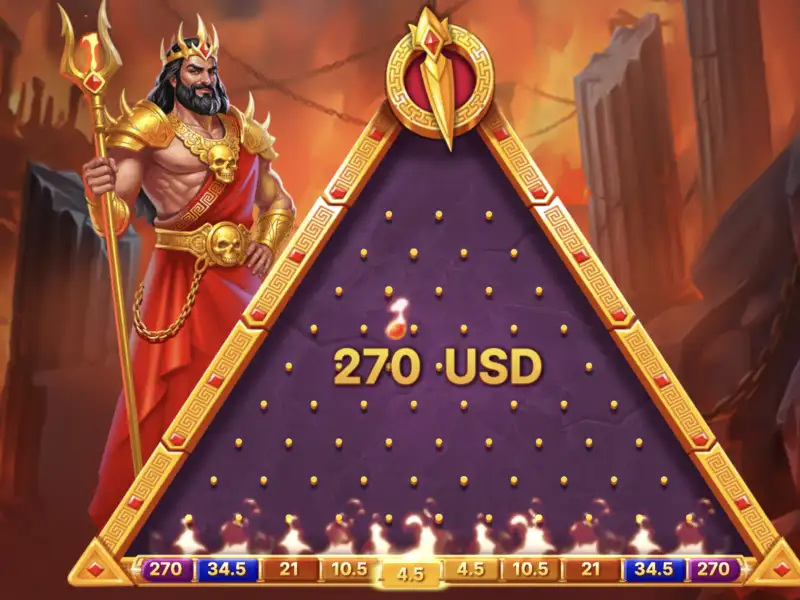
Cost: 100x bet. Bonus balls: 15. Boost range: 5x to 15x on a random multiplier slot.
Hades raises the boosted range and the entry cost. It fits demo testing before any real balance because the price doubles the Zeus buy.
Screenshots
Official GodPlay Plinko visuals
The gallery uses official VeliPlay uploads and desktop captures reviewed during research.

Desktop captures
More useful screenshots from the research set
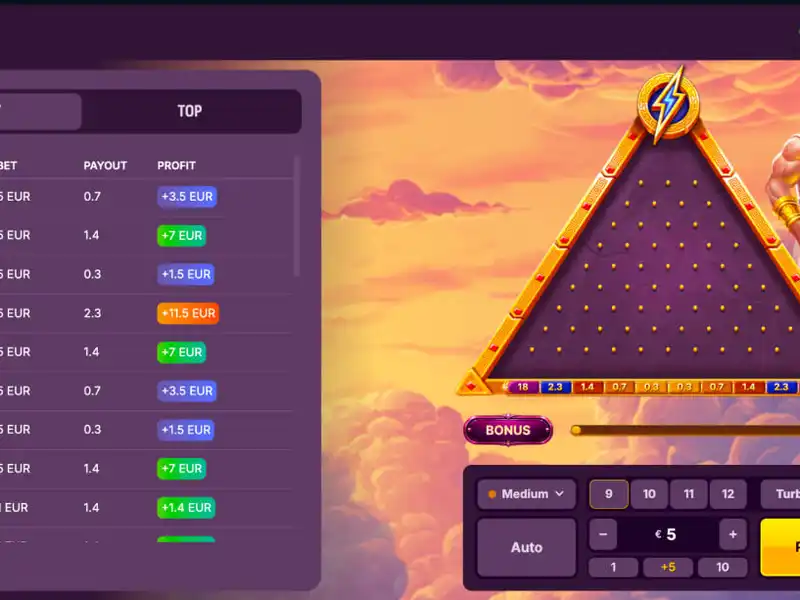
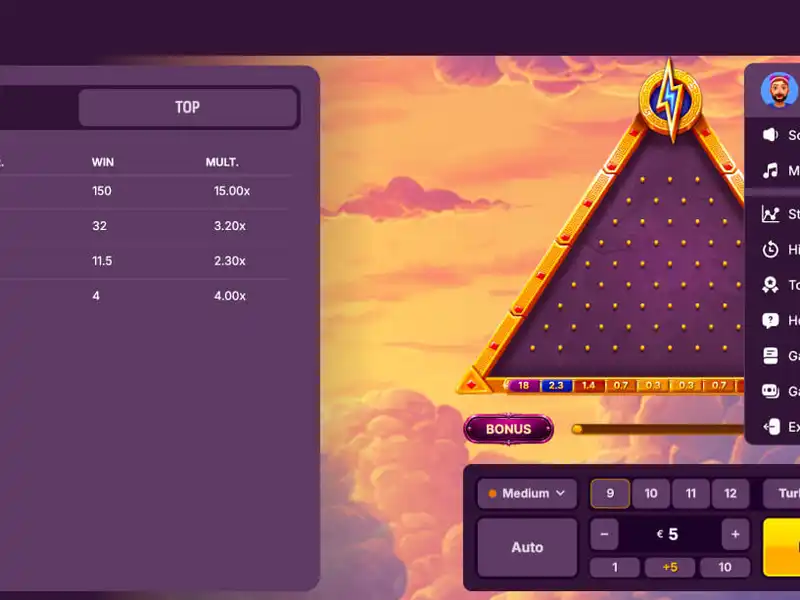
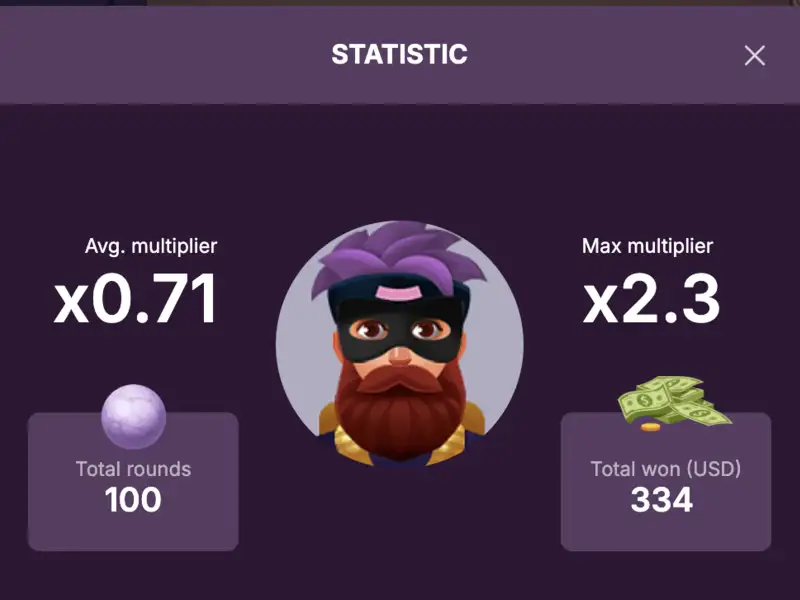
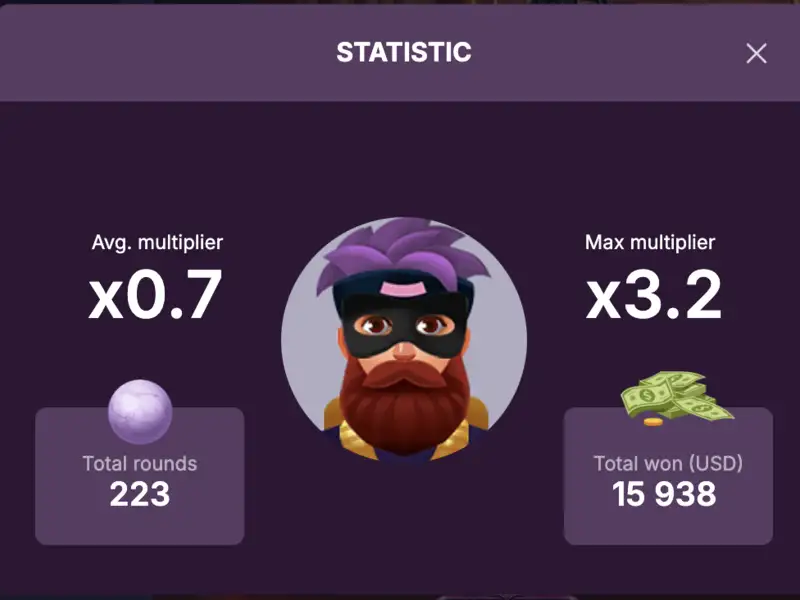
These are the brighter gameplay states from the desktop folder: board states, bonus boosts, win screens, history and statistic panels.
Matchups
Compare GodPlay Plinko with other games
Each tile opens an internal comparison page first. The external reference link sits inside that page, along with the screenshot, category and mechanics split.

InOut Games / arcade prize-machine casino game
GodPlay Plinko vs Play Lucky Duck
Both pages need to explain a playful casino surface before the player reads deeper rules.
Open comparison
Astriona / crash-style arcade game
GodPlay Plinko vs FlappyRise
Both titles turn a small visual action into risk pressure: one through flight timing, one through a falling ball.
Open comparison
InOut Games / slot with Hold and Win focus
GodPlay Plinko vs Chicken Coin
Both use coin values and feature tension, so the comparison helps separate slot bonus logic from Plinko drops.
Open comparison
InOut Games / instant road-crossing bonus game
GodPlay Plinko vs Chicken Road 2 Bonus
Both games sell rising tension through short rounds and visible risk choices.
Open comparison
InOut Games / vertical instant multiplier game
GodPlay Plinko vs Jumper
Both rely on compact rounds, visible multipliers and a clear moment of result tension.
Open comparison
SmartSoft / crash game
GodPlay Plinko vs JetX
Both need a plain warning that rising multipliers create emotion, not control over the result.
Open comparisonCalculator
Multiplier result calculator
The calculator multiplies a stake by a visible payout. It is arithmetic only, not a forecast.
Verdict
My practical read on GodPlay Plinko

Maya Sterling
Casino game reviewer focused on instant games, payout math, bonus terms and player-safety wording.
GodPlay Plinko has a stronger identity than a plain probability board because the Zeus and Hades mechanics give the game a visible theme and a paid feature layer. That identity is also the main reason this site should not look like the surrounding template projects. The game has its own motion language: the fall, the pegs, the split between center and edge slots, the charge of Zeus and the hotter Hades boost.
The honest limit is equally clear. A random landing decides the payout, and the house edge remains present even when the board looks dramatic. The useful way to approach the game is to learn the interface in demo, test one risk and row setup at a time, and set a session boundary before buying bonuses. If those rules feel restrictive, that is a sign to stay in demo mode.
Content update history
- - Built public GodPlay Plinko guide from official VeliPlay page, demo configuration and screenshot set.
- - Official VeliPlay page modification date recorded in the research file.
FAQ
GodPlay Plinko questions players ask
GodPlay Plinko is a VeliPlay Plinko instant game with Greek-god theming, rows, risk levels, Zeus progress and Hades or Zeus bonus buys. The ball drops through pegs and pays according to the multiplier slot where it lands.
Yes, the site is built around the demo intent. Use the free demo page to practice the board, row settings, risk levels and bonus behavior before any real-money decision.
This guide uses 96% because the official page meta and feature grid state 96%. One animated metric shows 97%, so the page labels that conflict instead of hiding it.
The official page lists a maximum win of 7,500x. That is a ceiling, not a target or a common result.
Zeus costs 50x the bet and boosts one multiplier slot by 2x to 5x. Hades costs 100x the bet and boosts by 5x to 15x. Both use 15 automatic balls.
No. The ball landing is random. Strategy only changes stake size, risk choice, row count, bonus use and when to stop.
The game runs in a browser-based casino interface. A separate APK is not required for most players, and third-party APK mirrors should be avoided.
The comparison hub uses Play Lucky Duck, FlappyRise, Chicken Coin, Chicken Road 2 Bonus, Jumper, JetX, Rocketon, Lu Fu Vortex, Pine of Plinko and Dream Drop Diamonds.
Source notes
Homepage source notes
The homepage should be read with two layers in mind. The first layer is visible on the screen: bet size, risk setting, row count, payout slots and feature buttons. The second layer sits in the rules: RTP, house edge, bonus restrictions and what happens when a connection drops. Keeping those layers separate prevents a player from treating a dramatic animation as proof of a better chance.
The VeliPlay page gives enough confirmed facts to build a useful guide, but it also shows one important conflict around RTP. This site uses 96% because that value appears in the official meta wording and feature grid. The conflicting 97% metric is still mentioned where relevant so readers see the source limit rather than a polished claim.
The most useful habit is to test one variable at a time. Change risk without changing rows, then change rows without changing risk. After that, compare Zeus and Hades in demo with the same bet size. This slower approach makes the board easier to understand because each change has a visible effect on payout shape or exposure.
Bonus buys deserve their own budget line. Zeus at 50x and Hades at 100x are not small side buttons when the base bet rises. They should be tested as separate events with their own stop point. A player who treats the buy button as a recovery tool is no longer reading the game clearly.
Auto bet and Turbo are convenience tools. They do not improve RTP, and they can make a session move faster than intended. A clear round cap matters more than the animation speed. If the board starts to feel automatic, stopping is the cleaner choice than changing risk to force a different result.
The game fits adults who like short rounds, clear multiplier slots and bonus states with a strong visual theme. It does not fit anyone looking for income, debt recovery, pressure play or a way around local gambling rules. Real-money play should start only after demo practice and account terms are understood.
The homepage should be read with two layers in mind. The first layer is visible on the screen: bet size, risk setting, row count, payout slots and feature buttons. The second layer sits in the rules: RTP, house edge, bonus restrictions and what happens when a connection drops. Keeping those layers separate prevents a player from treating a dramatic animation as proof of a better chance.
The VeliPlay page gives enough confirmed facts to build a useful guide, but it also shows one important conflict around RTP. This site uses 96% because that value appears in the official meta wording and feature grid. The conflicting 97% metric is still mentioned where relevant so readers see the source limit rather than a polished claim.
The most useful habit is to test one variable at a time. Change risk without changing rows, then change rows without changing risk. After that, compare Zeus and Hades in demo with the same bet size. This slower approach makes the board easier to understand because each change has a visible effect on payout shape or exposure.
Bonus buys deserve their own budget line. Zeus at 50x and Hades at 100x are not small side buttons when the base bet rises. They should be tested as separate events with their own stop point. A player who treats the buy button as a recovery tool is no longer reading the game clearly.
Auto bet and Turbo are convenience tools. They do not improve RTP, and they can make a session move faster than intended. A clear round cap matters more than the animation speed. If the board starts to feel automatic, stopping is the cleaner choice than changing risk to force a different result.
The game fits adults who like short rounds, clear multiplier slots and bonus states with a strong visual theme. It does not fit anyone looking for income, debt recovery, pressure play or a way around local gambling rules. Real-money play should start only after demo practice and account terms are understood.